
Northern Ireland has not had a proper multi year budget in more than a decade. Now it has a draft one. And before the ink is dry, it is already tearing at the seams of Stormont politics.
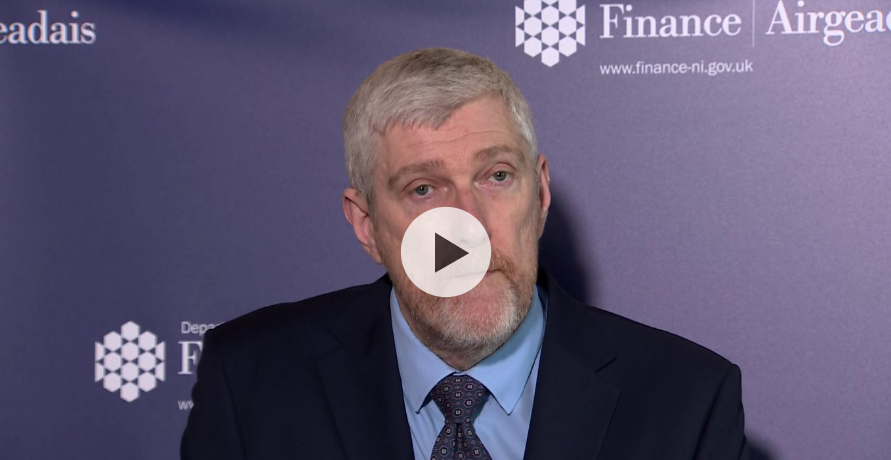
Finance Minister John O’Dowd says his proposed budget for the years ahead offers stability and a way out of crisis management. He calls it a foundation for transforming public services. Critics call it thin, cautious, and built on choices that nobody wants to own.
What is clear is that this plan lands at a moment when public services are stretched, staff are restless, and ministers are warning they cannot meet basic obligations. The budget is meant to run from 2026 through the end of the decade. The arguments around it have already started.
The promise
Why a multi year budget matters
Planning instead of firefighting
At its core, the proposal is about time. Departments usually work year to year, never sure what comes next. That encourages short term fixes, delayed projects, and spending decisions made in panic rather than strategy.
O’Dowd’s argument is simple. Give departments certainty over three years and they can plan staff, infrastructure, and reform. Hospitals can plan waiting list reductions instead of scrambling for temporary funding. Schools can think about long term staffing instead of yearly cuts. Roads, housing, and water projects can be sequenced properly.
That is the theory. The reality is less generous.
The budget assumes tight growth. Next year’s overall increase is less than one percent in cash terms. In recent years, Stormont was used to far higher jumps. When inflation is factored in, many departments are effectively standing still or falling back.
Only four areas see even modest uplifts in the first year. Health, education, justice, and infrastructure. And even there, ministers say the room to move is tiny.
The squeeze
Health and education under strain
Big numbers, bigger problems
Health takes the largest share, as it always does. On paper, it gets slight increases year on year. In practice, those increases barely keep the lights on.
The plan sets aside dedicated money for hospital waiting lists across three years. That is new and welcomed by many. It allows trusts to think ahead about staffing theatres and wards. It also signals political recognition that waiting lists have become a defining failure of the system.
But the unresolved issue is pay. Health workers have been clear they want parity with colleagues elsewhere. With funding rising by less than one percent next year, it is unclear how that happens without cuts or confrontation. Ministers have already warned of overspends just to meet existing pay commitments.
Education faces a different but equally stark reality. Its budget is huge, but staffing costs swallow most of it. The planned increase is marginal. The education minister has responded by laying out what savings on the scale required would actually mean.
He has spoken openly about scenarios that include ending home to school transport, cutting early years and youth services, and the theoretical loss of thousands of jobs. Nobody expects those exact outcomes. But the message is blunt. The system cannot absorb this level of pressure without damage.
The trade offs
Where the money goes
And where it does not
Beyond day to day spending, the draft budget outlines priorities for capital investment. Social housing is promised significant funding. Water infrastructure also gets a large allocation, reflecting long standing concerns about capacity and environmental risk.
There is money earmarked for special educational needs buildings and for redeveloping major sports facilities, with adjustments linked to inflation. Supporters say these commitments honour existing promises. Critics argue they highlight how little flexibility exists when large sums are already spoken for.
To help close the gap, the finance minister proposes increases to regional rates for households and businesses. Over three years, that would raise hundreds of millions in extra revenue. It is a politically risky move in a cost of living crisis, but one presented as unavoidable.
The politics
A budget without consent
Opposition from all sides
This is not an agreed executive budget. That matters.
Opposition parties have wasted no time attacking it. Some describe it as empty of vision. Others say it simply manages decline while blaming forces outside Northern Ireland. The language is sharp, accusing the executive of drifting while services erode.
Unionist critics argue that frontline services are not being properly prioritised and that waste elsewhere is going unchallenged. They reject the idea that this plan should be treated as a collective position.
Others warn that their departments may be unable to meet legal duties under the proposed limits. There are also renewed calls to confront the cost of maintaining parallel systems across a divided society, arguing that real savings are being ignored.
O’Dowd says he is listening. He has invited alternative proposals and signalled willingness to engage. But time is short. A final budget is meant to be agreed within weeks.
The bigger question
Transformation or managed decline
What happens next
The fight over this budget is not just about numbers. It is about honesty.
Can public services be transformed on growth of less than one percent? Can waiting lists be cut without resolving pay disputes? Can schools be stabilised without confronting how education is delivered and staffed? Or is this simply a holding operation dressed up as reform?
Supporters argue that certainty itself is progress. That even a tight multi year budget is better than chaos. That once departments can plan, they can reform from within.
Critics counter that certainty about underfunding is not transformation. It is managed decline with better spreadsheets.
The public consultation now begins. It will attract submissions from unions, charities, councils, and individuals who see the impact of these decisions every day. Whether that feedback meaningfully reshapes the plan remains to be seen.
What is certain is this. Northern Ireland’s budget debate is no longer abstract. It is about hospital queues, classrooms, housing, water, and wages. And whichever version of this budget finally passes, it will shape daily life long after the political arguments fade.
The question Stormont now has to answer is simple, and uncomfortable. Is this the best that can be done, or just the least painful option left?