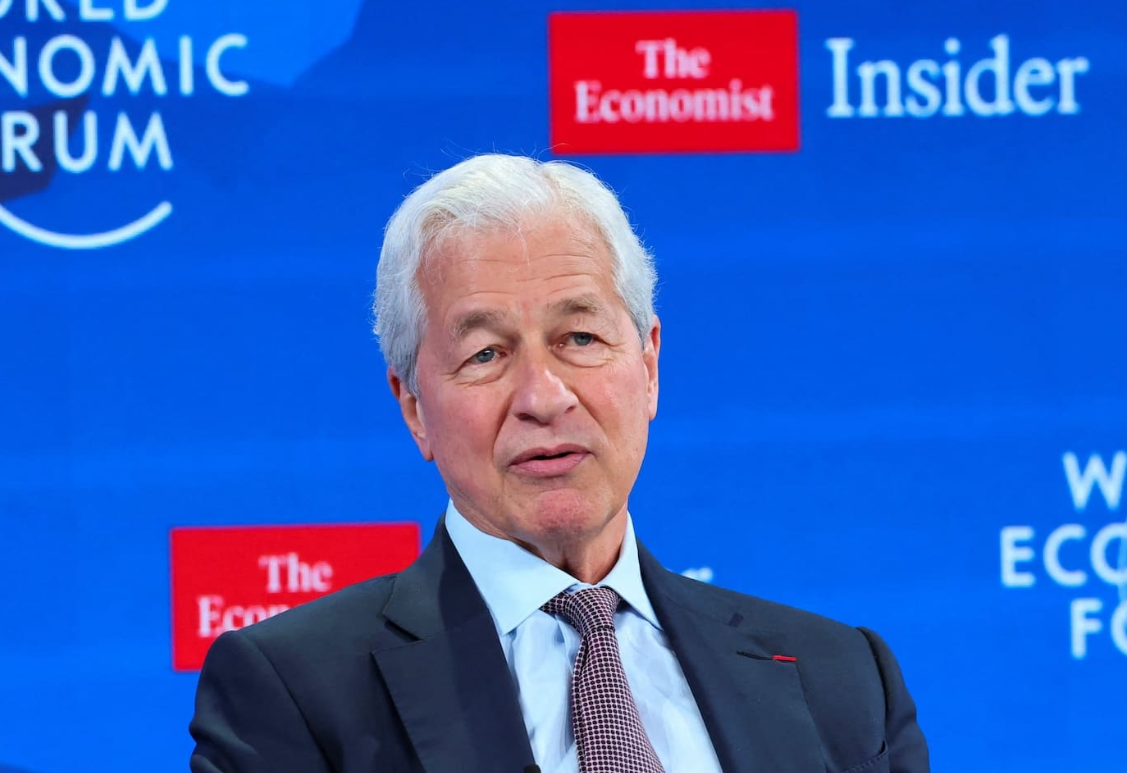
Jamie Dimon just dropped a bombshell at Davos. The JPMorgan Chase CEO predicts artificial intelligence will shrink his bank’s workforce over the next five years. Even as the company expands worldwide, expect fewer than the current 317,000 employees on payroll.
Dimon laid it out during a panel at the World Economic Forum in Switzerland this week. AI isn’t just coming, he said. It’s exploding faster than society can handle. “I do think it may go too fast for society,” Dimon told the crowd. He urged governments and businesses to team up on retraining workers and easing the transition.
JPMorgan leads the charge among big banks in rolling out AI. The firm now runs about 500 AI applications across its operations. These tools handle everything from spotting fraud to assessing risks, crafting marketing pitches, serving customers, and approving loans.
Roughly 150,000 employees tap into the bank’s own large language models every week. Dimon called this just the beginning. “I still think it’s the tip of the iceberg,” he said. He compared AI’s speed to the internet or electricity, but way more intense, with growth curving sharply upward right now.
The bank carved out AI as its own powerhouse unit. It sits at the top table with executives, separate from everyday tech teams. Marianne Lake, who runs consumer banking, has forecast operations teams could boost productivity by 40 to 50 percent in five years. That means headcount climbs slower, even if business booms.
Dimon didn’t sugarcoat the fallout. He painted a picture of real pain for workers caught in the shift. Take trucking as exhibit A. Autonomous vehicles could wipe out jobs for two million drivers pulling in $150,000 a year each. Their next gig might pay $25,000.
“Do it all at once, and you’ll have civil unrest,” Dimon warned bluntly. He pushed for a measured rollout. Governments and companies must coordinate on retraining, relocation help, and income bridges for those hit hardest. He pointed out we botched this during past trade disruptions, when factories shuttered without solid safety nets.
At 69, Dimon speaks from decades steering the world’s biggest bank by market cap. JPMorgan pulls in massive revenue, but AI promises to reshape how it all happens. The tech already automates grunt work once done by armies of analysts and clerks. Risk models that took days now run in hours. Fraud alerts ping in real time.
Customer service bots field queries around the clock, freeing humans for complex cases. Credit decisions speed up with AI sifting vast data piles. Marketing teams get hyper-targeted campaigns based on predictive algorithms. Dimon stressed this isn’t hype. It’s deployed, scaling, and delivering results.
Banks face a stark choice, per Dimon. Embrace AI or get crushed. “If you put your head in the sand, you will lose,” he said. Competitors who lag will bleed market share to nimbler players. JPMorgan bets big, hiring AI talent and building tools in-house.
This isn’t isolated to one bank. Wall Street hums with similar moves. Goldman Sachs deploys AI for trading signals. Citigroup tests it for compliance checks. Morgan Stanley feeds advisors with AI research summaries. The entire sector braces for transformation. Dimon positions JPMorgan ahead, but he knows the risks.
Zoom out, and the stakes go way beyond finance. AI touches every corner of the economy. Factories automate assembly lines. Retail bots manage inventory. Healthcare algorithms diagnose scans. White-collar jobs once thought safe now face algorithms too. McKinsey estimates 45 million U.S. jobs could shift by 2030 due to automation.
Dimon’s Davos talk echoes broader fears. Tech optimists tout productivity leaps and new opportunities. Pessimists see mass unemployment without safeguards. History offers mixed lessons. The industrial revolution displaced farmhands but birthed factory work. Computers gutted typists yet spawned software empires.
AI feels different, faster, more pervasive. It doesn’t just muscle heavy loads. It reasons, writes, creates. Large language models like those at JPMorgan mimic human thought. They draft reports, code software, negotiate terms. No wonder Dimon calls for collaboration. Pure market forces might spark backlash.
Policymakers grapple with responses. Universal basic income floats as one idea. Expanded unemployment benefits another. Tax AI profits to fund retraining programs. Europe pushes AI regulations with worker protections baked in. The U.S. lags, torn between innovation zeal and labor worries.
Dimon wants phased adoption. Roll out AI in waves, giving workers time to adapt. Pair it with upskilling initiatives. JPMorgan invests in its own programs, teaching staff to wield AI tools. But scaling that nationwide demands public-private muscle.
Critics question if CEOs like Dimon truly prioritize workers. Banks chased profits through the 2008 crisis, fueling bailouts and anger. Now, with AI supercharging margins, will they share the gains? Dimon insists yes, but actions will tell.
Workers feel the squeeze already. Layoff whispers ripple through finance. Middle-office roles vanish as software takes over. Entry-level analysts compete with AI summaries. Veterans pivot to oversight gigs, managing the machines.
What happens if AI outpaces fixes? Dimon evokes unrest, not hyperbole. Truckers form a powerful bloc, with unions ready to fight. Finance pros organize differently, but discontent brews. Broader society could fracture if blue-collar and white-collar losses pile up.
Optimism lingers. AI could spawn jobs we can’t yet imagine, like prompt engineers or ethics overseers. Economic growth might lift all boats. JPMorgan grows revenue 10 percent yearly; AI could accelerate that, funding more hires in high-skill areas.
Dimon ends on a pragmatic note. Progress demands adaptation. Resist, and fall behind. Charge ahead blindly, and risk chaos. The path lies in balance: harness the tech, cushion the humans.
As AI reshapes banking and beyond, one question hangs: Will leaders like Dimon deliver on promises to soften the blow? Or will job cuts dominate headlines while profits soar? Your thoughts in the comments; this debate is just starting.